

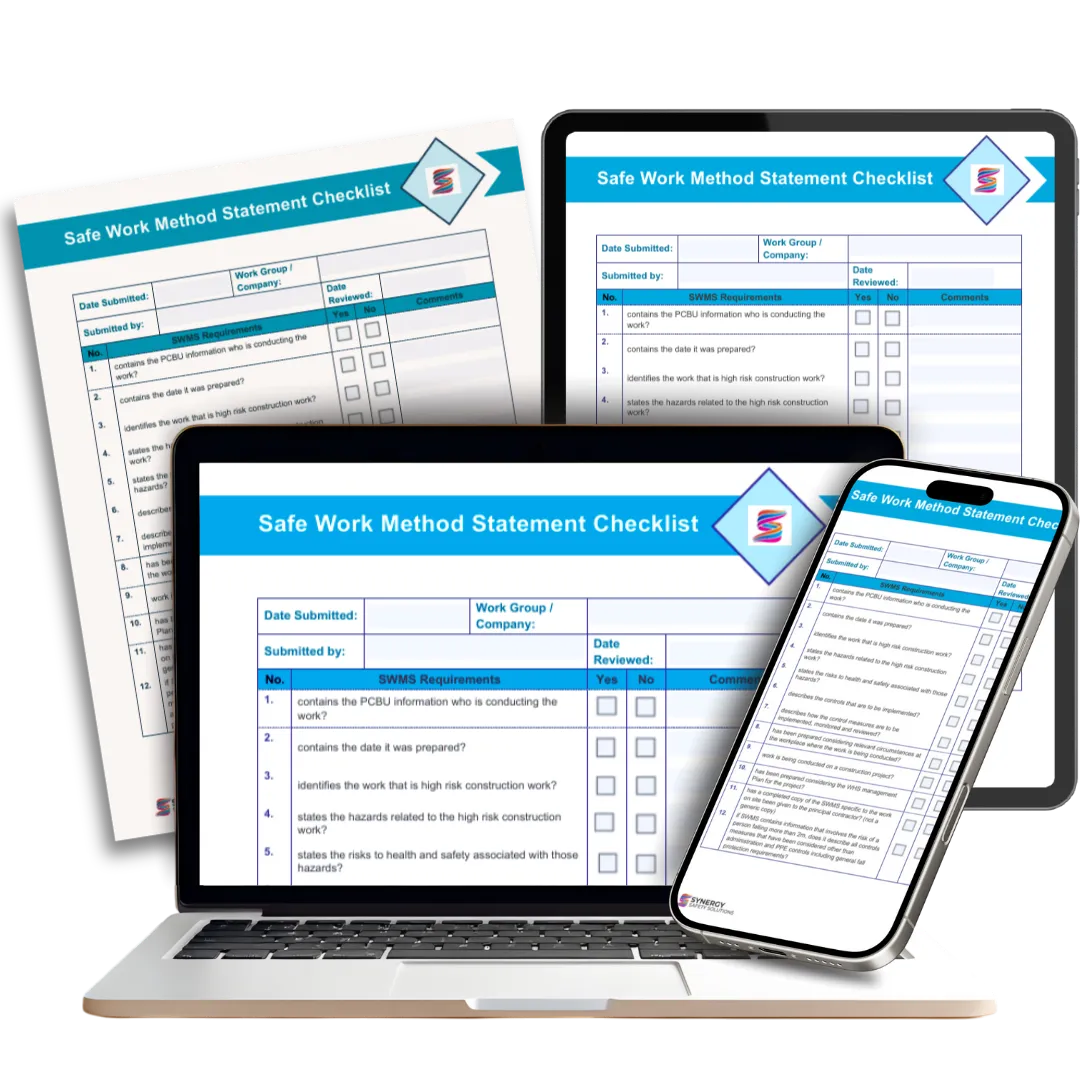
Free SWMS Checklist
Make sure your Safe Work Method Statements actually meet WHS expectations and protect your people, project, and your business.
A simple, practical checklist created for construction teams, subcontractors, and project managers
who want SWMS that work on site, not just on paper.
Get instant access to a comprehensive checklist that helps you simplify your SWMS.
Why This Checklist Matters
If your team is doing high-risk construction work, you’re legally required to have a Safe Work Method Statement.
But here’s the truth... most SWMS are either:
Copied from a template
Too generic
Missing critical controls
Not updated when things change on site
Not aligned with the WHS Management Plan
That puts your project and people at risk!
This checklist helps you quickly assess whether your SWMS is clear, accurate, specific, and compliant.
What's Inside the
Free SWMS Checklist
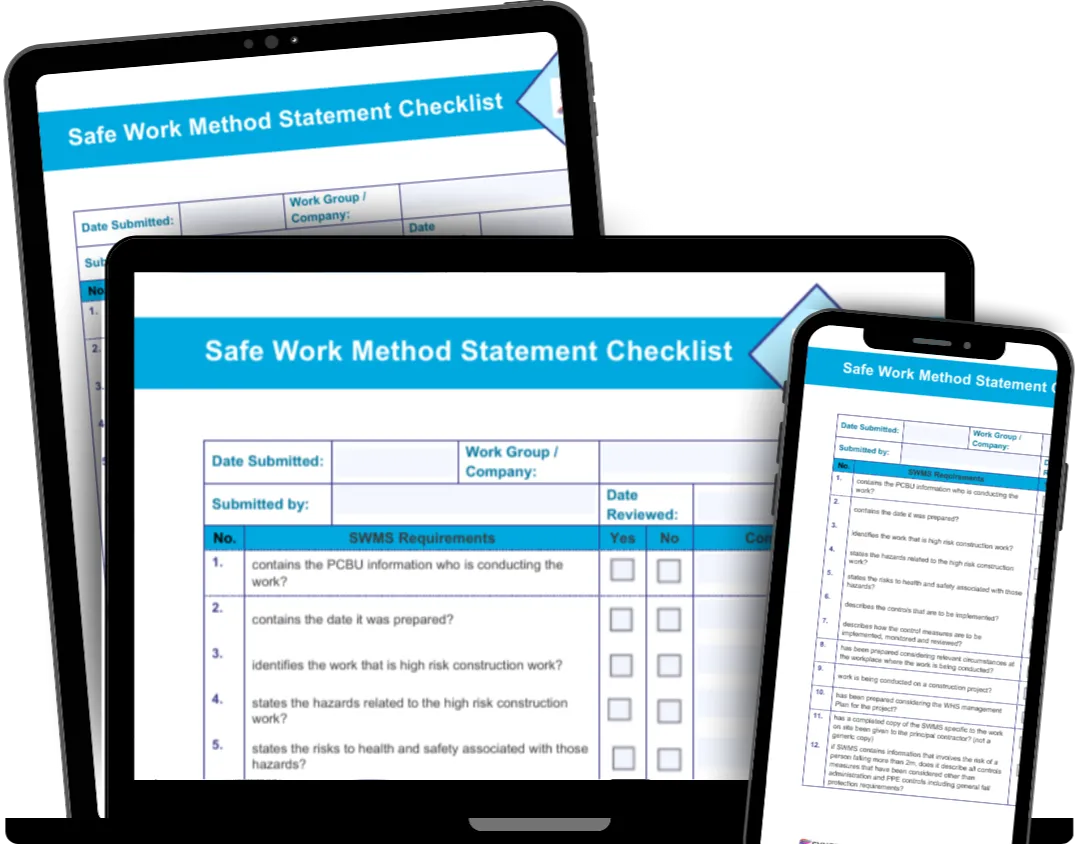
This tool helps you self-check whether your SWMS includes:
The correct PCBU information
The date it was prepared
Identification of high-risk construction work
Clear hazards and associated health & safety risks
The right control measures for each stage
and more...
It’s simple, practical, and immediately useful, even if you’re not a safety expert.

Who the Checklist is For
This checklist is perfect for:
Subcontractors
SME builders
Project managers
Foremen / supervisors
Civil contractors
Safety advisors
Anyone preparing, reviewing, or signing off SWMS
Created by a Construction Safety Specialist
Meet Kris Cotter of
Synergy Safety Solutions
Kris Cotter is a WHS consultant with experience in heavy construction, cranes / rigging, civil works, and frontline safety leadership.
She’s helped hundreds of teams move from confusing, generic SWMS to clear, practical, site-specific documents that workers will actually follow.

Frequently Asked Questions
What is a Safe Work Method Statement (SWMS)?
A SWMS explains how high-risk construction work will be done safely, including the hazards, the risks, and the control measures.
Do I need a SWMS for every job?
No. Only for work classified as "high-risk" under the WHS Regulations.
Can I use a template for our SWMS?
You can start with one, but it must be customised. A one-size-fits-all SWMS won’t hold up if something goes wrong.
When should I review a SWMS?
Whenever something changes on site, or if the control measures aren’t working.
Who prepares the SWMS?
The PCBU doing the high-risk work must make sure it’s done correctly and followed.

At Synergy Safety Solutions, we understand that ensuring the safety and well-being of your employees is of the utmost importance.
FOLLOW US



NEWSLETTER
At Synergy Safety Solutions, we understand that ensuring the safety and well-being of your employees is of the utmost importance.
ABN: 11 672184833
FOLLOW US
NEWSLETTER